

Established 2011 · HMRC-bonded storage · Fully insured · Full legal ownership
Whisky Cask Investment: Own a Scotch Whisky Cask
Own a named cask of Scotch whisky, held in bond in your name, with the option to sell it on as it matures.
Whisky cask investment offers genuine scarcity, centuries of heritage and a tangible asset you can call your own, not a line on a statement.
Whisky cask investment is not regulated by the FCA or covered by the FSCS. Its value can fall as well as rise and capital is at risk.
Watch: 7 tips before you buy a whisky cask

Speak to a Senior Trader
Tell us about your investment objectives and we’ll arrange a no-obligation consultation.
Or download our free Private Brochure →
By submitting you agree to receive communications from
Vintage Acquisitions. Unsubscribe at any time.
What is whisky cask investment?
Whisky cask investment is the purchase of a single, identifiable cask of maturing Scotch whisky, bought
in your name and stored under bond in an HMRC-approved warehouse, to be sold on at a later date.
What is a whisky cask?
A cask is an oak barrel used to mature Scotch whisky, typically previously used to age bourbon or sherry,
which shapes the whisky’s flavour as it matures. Casks vary in size and common types include barrels, hogsheads
and butts, each holding a different volume of maturing spirit. While the whisky sits in bond, it continues to develop in
character and, generally, in value.
Cask ownership vs buying bottles
| Cask ownership | Buying bottles | |
|---|---|---|
| What you own | A single cask, held in your name | Finished, bottled whisky |
| Storage | HMRC-bonded warehouse | Wherever you choose to keep it |
| Tax position | Generally treated as CGT-exempt (wasting asset)* | No equivalent exemption |
| Exit routes | Sell the cask, or bottle and sell | Sell or drink |
*See our tax section below. This isn’t automatic or guaranteed and isn’t tax advice.
Who invests in whisky casks?
Cask investors range from people looking to diversify a wider portfolio with a tangible asset,
to whisky enthusiasts who want to own something closer to the source than a bottle, to those
planning ahead for estate and inheritance purposes. Motivations vary, but most investors share
a long-term outlook.
Why invest in Scotch whisky casks
Investing in whisky casks has become an increasingly popular way to diversify a portfolio while holding
a tangible asset that can also carry personal or family significance.

Appreciation over time
Scotch whisky generally gains value the longer it matures, as older, rarer stock from respected distilleries tends to command higher prices. This isn’t guaranteed for every cask and outcomes depend on the specific distillery, cask type and market conditions at the time of sale.

Portfolio diversification
Whisky cask values don’t move in lockstep with stock markets or property, so a cask can add a layer of diversification to a wider portfolio. As with any alternative asset, this comes with different risks rather than fewer risks.

Heritage and legacy
A cask can be held for years and eventually passed on or bottled to mark a family milestone, giving it a story as well as a value. This is something bottled whisky, bought ready-made, doesn’t offer in the same way.

Full legal ownership
You receive a Delivery Order confirming your ownership of a named cask, along with your unique cask number and warehouse account details. This paperwork proves the cask is legally yours, independent of Vintage Acquisitions as a company.
Scotch whisky: the market and why it holds value
Scotch whisky’s appeal to investors comes from a combination of heritage, scarcity and genuine
global demand.
What makes Scotch whisky desirable to investors?
- Heritage: Scotch has centuries of production history and strict rules on what can legally be called Scotch, which underpins its credibility.
- Geography: Different Scottish regions produce distinct styles, giving investors a genuine choice rather than a single commodity.
- Ageing: Whisky can only be called Scotch after a minimum of three years’ maturation in Scotland, set out in the Scotch Whisky Regulations 2009, and most investment-grade stock matures for considerably longer.
- Regulation: Production is tightly controlled under the Scotch Whisky Regulations, which supports consistency and, in turn, buyer confidence.
- Collector demand: Rare and limited releases from sought-after distilleries attract genuine collector interest, which supports resale value.
Scotland’s six whisky regions
| Region | Character | Why it matters to a buyer |
|---|---|---|
| Speyside | Fruity, often sherry-influenced single malts | Home to many of the most collected names, including Macallan and Glenfiddich |
| Highland | Broad range of styles, from light to rich | Wide choice, with several long-established collectible names |
| Islay | Peated, smoky, distinctive | Strong, loyal following among whisky enthusiasts worldwide |
| Lowland | Lighter, more delicate style | Fewer active distilleries than the larger regions |
| Campbeltown | Characterful, once a major distilling hub | Now home to only a small handful of active distilleries |
| Islands | Varied, often smoky and coastal in character | Distinct identity from the Highlands |
The market in numbers
- Global Scotch whisky exports were worth approximately £5.3 billion in 2025, equivalent to around 1.3 billion bottles worldwide.
- Scotch is exported to over 160 markets globally, giving the category broad, geographically diversified demand.
- India became Scotch’s largest export market by volume in 2025, with exports up 15% year-on-year to 220 million 70cl bottles. Tariffs fell from 150% to 75% under a UK–India trade agreement.
How to invest in whisky: the purchase process
Investing in a whisky cask with Vintage Acquisitions follows a straightforward process from initial enquiry through to ownership.

1
Initial conversation
A call to understand your goals, budget and time horizon.
2
Recommendations
We match cask options to your budget and requirements.
3
Selection and checks
You choose a cask, receive an invoice and complete an anti money laundering check.
4
Ownership and storage
You receive your ownership documentation and your cask is stored at Campbeltown Bond, our HMRC-bonded warehouse.
5
Ongoing access
You can monitor your cask through our client portal and are enrolled in the Vintage Whisky Club.
What documentation you receive
You receive a Delivery Order confirming your ownership of a named cask, along with your unique cask number and warehouse account details. This paperwork is what proves the cask is legally yours, independent of Vintage Acquisitions as a company.
What it costs to get started
Entry costs vary considerably. Across our full range of stock, prices can range from around £2,000 for newer casks to £500,000 for the rarest, most sought-after stock, depending on the age, distillery and type of cask. Broadly, newer casks sit at the lower end of that range, while rare or well-matured stock from sought-after distilleries costs significantly more.
Because the right entry point depends on your own goals, budget and time horizon, the best next step is a conversation with our team, who can talk through options suited to your specific circumstances.
Cask options, distilleries and pricing change regularly. Get in touch to hear what’s currently available.
Whisky investment returns: what to expect
Any return on a whisky cask is realised when it’s sold, not paid out along the way, and it varies by cask.
What drives a cask’s value
Value is shaped by factors including the distillery’s reputation, the cask’s age and type, and how the wood has influenced the spirit during maturation. Rarer, well-regarded distilleries with genuine secondary-market demand tend to hold and grow value more reliably than others, though this isn’t guaranteed for any individual cask.
Costs and losses that affect your return
Any return should be considered net of costs, which include:
- The angel’s share: Natural evaporation of approximately 1-2% of the cask’s volume per year, varying by cask, warehouse conditions and age.
- Storage and insurance: We provide three years’ free storage and insurance as standard, after which a charge of £85 per cask per annum applies (subject to change).
- Selling fees: Costs associated with whichever exit route you choose.
How casks compare with other assets
A whisky cask behaves quite differently to more familiar asset types, which is worth understanding before you compare it to anything else in your portfolio.
| Asset | Notes |
|---|---|
| Whisky cask | Illiquid, unregulated, value realised on sale |
| FTSE 100 | Liquid, regulated, dividend income |
| Gold | Liquid, no income, seen as a traditional hedge |
| Gilts | Liquid, regulated, fixed income |
This table is for general illustration only and is not a comparison of like-for-like returns or risk profiles.
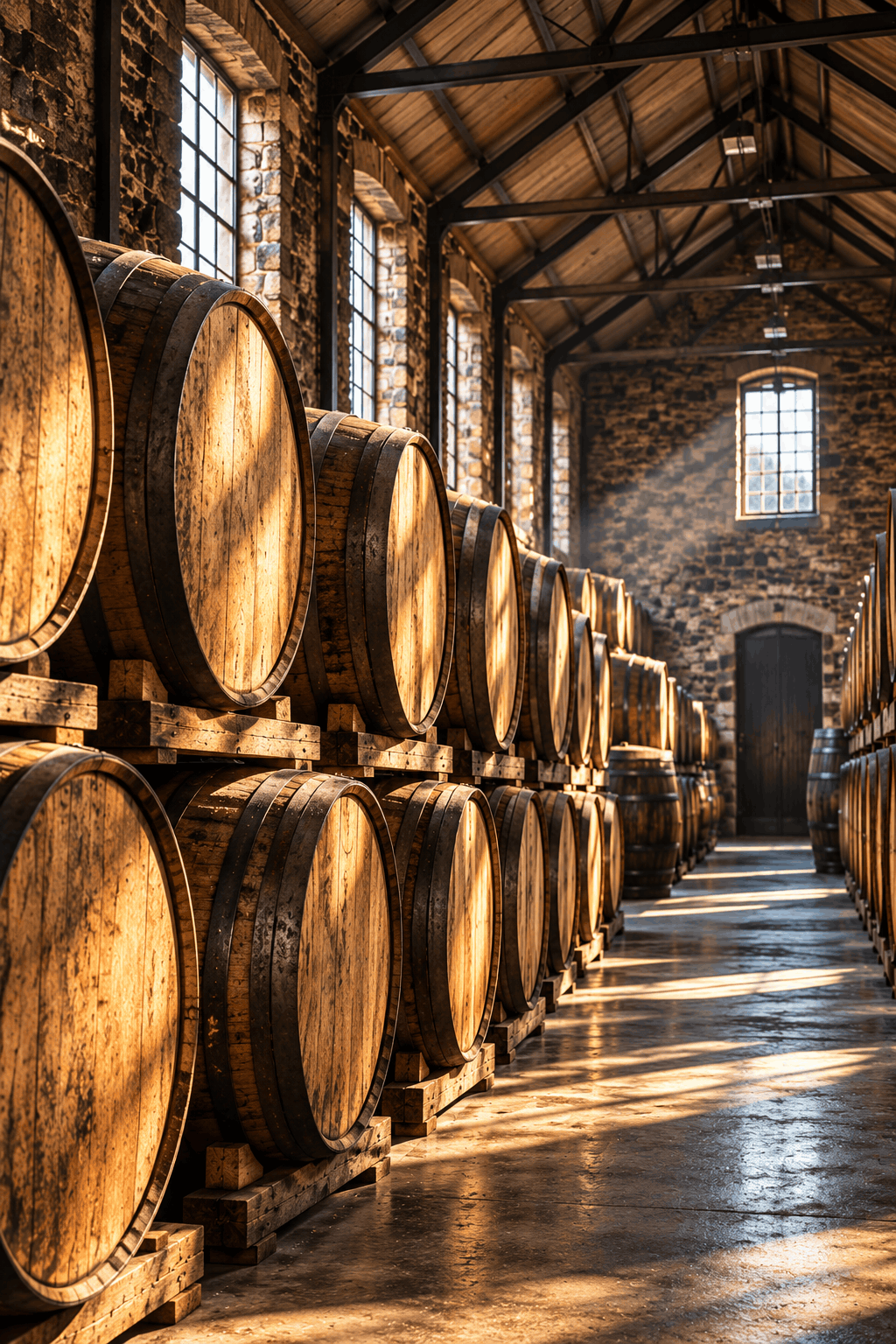
Campbeltown Bond
How your cask is protected
Your cask is held under a Delivery Order in your name, independently of Vintage Acquisitions as a company, in HMRC-bonded storage. It’s insured free of charge for three years, after which a fee of £85 per cask per annum applies. This charge may be subject to change. Learn more about storage & provenance
- HMRC-bonded storage at Campbeltown Bond
- Fully insured, free for the first three years
- Delivery Order in your name, independent of the company
- Visit Campbeltown Bond and taste your whisky
- Bottle via our sister company, Vintage Bottlers
- Monitor your cask through our client portal
Choosing the right cask
Cask types and sizes
Barrel
~190-200 litres
Hogshead
~225-250 litres
Butt
~475-500 litres
Single malt vs grain whisky
Single malt Scotch whisky is made from malted barley at a single distillery using pot stills. Grain Scotch whisky can be made using other cereals alongside malted barley and is typically distilled using continuous stills. Both are traded in cask form, but their characteristics, uses and market values can differ.
Distillery, age and ABV
When reviewing a cask offer, check key details including the distillery, year of distillation, cask reference, cask type, volume and current ABV (alcohol by volume). Both the volume and alcoholic strength of the spirit can decrease during maturation, so these factors are important when assessing a cask and its contents.
Whisky investment and UK tax
Whisky casks can be treated as “wasting assets” that are exempt from capital gains tax (CGT) but this isn’t automatic. This section provides general information rather than personal tax advice.
CGT and the wasting-asset rule
A whisky cask can generally be treated as a wasting chattel – an asset with a predictable life of 50 years or less – meaning gains on sale are typically exempt from CGT. This depends on the cask being held as a personal, passive investment rather than as part of a trading activity and the position should be confirmed against current HMRC guidance.
Inheritance tax and estate planning
A whisky cask can form part of your estate like any other asset and may be liable for inheritance tax above the current nil-rate band. There’s no special exemption for whisky casks, so anyone considering a cask as part of estate planning should take independent advice.
Duty and VAT when you bottle
While a cask remains in bond, duty and VAT are suspended. These become payable, based on volume and strength at the time, if and when the whisky is bottled or removed from bond.
This is general information, not personal tax advice. Please speak to a qualified tax adviser about your own circumstances.
Is whisky investment safe? Risks and regulation
Is whisky cask investment regulated?
No. Whisky cask investment is not regulated by the FCA and isn’t covered by the Financial Services Compensation Scheme. At Vintage Acquisitions, we have our own FCA-registered compliance officer who reviews our content and business practices, but this doesn’t mean the underlying cask investment itself is FCA-regulated.
The main risks
The main risks are illiquidity (casks can take time to sell), valuation uncertainty (there’s no public market price) and counterparty risk (the importance of buying from a reputable, established seller).
How to avoid whisky investment scams
Be wary of any provider promising guaranteed or fixed annual returns. The Advertising Standards Authority has taken enforcement action against misleading return claims in this sector since 2024. Always insist on a Delivery Order in your name, confirm the named bonded warehouse’s HMRC approval and check the seller’s Companies House record before buying.
Six exit options: how to sell your cask
Sell back to us
Sell your cask directly back to us.
Live inventory
List your cask in our live inventory, for our global client network to view.
Auction
Sell at auction.
Independent bottler
Sell to an independent bottler.
Bottle it
Bottle your whisky to share with family, friends and colleagues.
Back to the distillery
Sell back to the distillery, where the cask’s rarity allows.
When to sell
Most cask investors work to a minimum holding period of around five to ten years, giving the whisky time to mature, though the right time to sell depends on your own goals and the specific cask.
Why investors choose Vintage Acquisitions
Our credentials
Vintage Acquisitions was established in 2011 and we’re celebrating 15 years in the industry this year. Client casks are insured and stored at an HMRC-approved bonded warehouse, and our content and business practices are reviewed by our own FCA-registered compliance officer.
We source casks from Scotland’s leading distilleries
We work with respected distilleries across Scotland’s whisky regions, chosen for their reputation and genuine secondary-market demand.
Client experience
We’re currently rated 4.9 out of 5 on Trustpilot.
If you’re considering whisky cask investment, get in touch for a conversation about your goals, budget and timeline. Every investor’s circumstances are different, and that’s the best starting point.
Whisky investment FAQs
How much does a whisky cask cost?
Prices vary considerably by age, distillery and cask type, generally from a few thousand pounds for younger casks, rising well into five or even six figures for rarer or more mature stock. Because pricing depends on what suits your goals, the best way to get an accurate figure is to talk to our team.
How long should I hold a whisky cask before selling?
Most investors work to a minimum of around five to ten years, giving the whisky time to mature, though this varies by cask and individual circumstances.
What returns can I expect from whisky cask investment?
There’s no guaranteed or typical return. Outcomes depend on the specific cask, distillery and market conditions at the time of sale and any return is realised only when the cask is sold.
Is whisky cask investment regulated?
No. It isn’t regulated by the FCA and isn’t covered by the FSCS. Vintage Acquisitions’ casks are held under HMRC’s excise warehousing rules at an approved bonded warehouse. We also have our own FCA-registered compliance officer overseeing our content and practices.
Is investing in whisky tax free?
Whisky casks can generally be treated as CGT-exempt wasting assets, but this isn’t automatic and depends on your circumstances. This isn’t tax advice and you should speak to a qualified adviser.
How is my cask stored and insured?
Your cask is stored at Campbeltown Bond, our HMRC-bonded warehouse, and is fully insured. We provide three years’ free storage and insurance as standard.
How do I know my cask exists and that it is mine?
You receive a Delivery Order in your name confirming your legal ownership, independent of Vintage Acquisitions as a company.
What is the angel’s share and how much whisky will I lose?
The angel’s share is the natural evaporation that occurs as whisky matures in cask. This is typically around 1-2% of volume per year, though this varies by cask, warehouse conditions and age.
Can I visit, taste or bottle my whisky?
Yes. Cask owners can visit Campbeltown Bond and you can bottle your whisky via our sister company, Vintage Bottlers, perhaps to mark a personal occasion. We can also arrange tastings, with samples and extra regauges available for an additional fee.
What happens to my cask if I die?
Your cask is a personal asset and forms part of your estate like any other, so it passes on according to your will or the rules of intestacy. It may be subject to inheritance tax above the current nil-rate band.
What happens if the company I bought through ceases trading?
Your ownership is held independently via your Delivery Order, so your cask remains yours regardless of the company’s status. This is a key reason we recommend always insisting on this documentation.
What is the difference between a barrel and a cask?
“Cask” is the general term for any oak container used to mature whisky. “Barrel” refers specifically to one size and type of cask, typically holding around 190-200 litres.
Ready to talk about whisky cask investment?
The value of investments can go down as well as up, and past performance is not a guarantee of future performance. Fees and Terms & Conditions apply. You should seek independent financial advice before making any investment decision.
Vintage Acquisitions has appointed an in-house compliance professional responsible for overseeing and approving all relevant business activities, thereby ensuring communication and processes are conducted with fairness and transparency.